
-
 Fraud Mitigation & Data Integrity
Essential tools for trust, integrity, fraud prevention & regulatory compliance.
-
 Routing Optimization
Gain access to authoritative routing data to create the ultimate routing intelligence for your traffic.
-
 Number Administration
Empowering connectivity as the FCC appointed administrators for critical numbering registries.
-
 Connected Device Intelligence
Gain total transparency to your IoT assets’ current state and vulnerabilities.
What's Happening
Learn about the latest news and updates from Somos.
EVENT
Registration for the 2026 Somos Summit is Still Open!
Join us Nov. 2-3 in Washington, D.C., as global thought leaders, fraud prevention experts and innovators from across telecom and beyond come together for two days of insights, innovation and conversations on how “Restoring Trust Starts with Us”.
INSIGHT
Restoring Trust in the World’s Communications
Gina Perini shares a bold vision for the future: restoring trust in the world’s communications and reestablishing the phone number as a trusted form of identity.
Insights
Building Trust Across Voice, Messaging and Digital Identity: Highlights from MEF Leadership Forum Canada
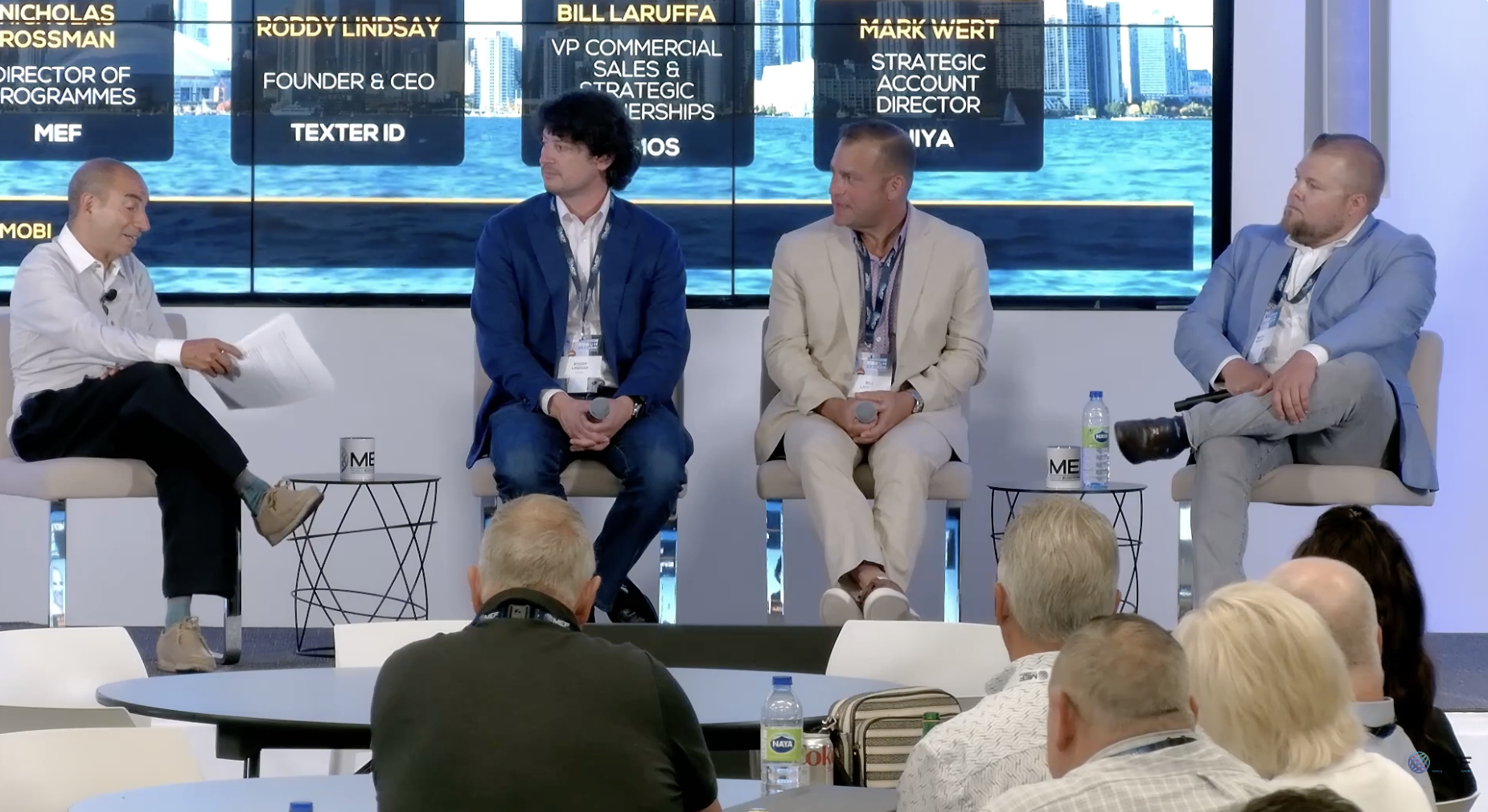
At the Mobile Ecosystem Forum (MEF) Leadership Forum Canada 2026, Bill LaRufa, VP of Commercial Sales and Strategic Partnerships at Somos, joined leaders Roddy Lindsay, Founder & CEO at TexterID and Mark Wert, Strategic Account Director at Hiya for a discussion moderated by Nicholas Rossman, Director of Programs at MEF.
The discussion focused on brand trust, digital identity and the role telephone numbers continue to play across voice, SMS and RCS (rich communication services), especially as fraud tactics become more sophisticated and move across channels.
Key Takeaways
-
Trust starts with identity. Consumers need clearer signals that show who is contacting them and whether that communication can be trusted.
-
Fraud crosses channels. A scam may begin with a text message, continue with a phone call and end in financial loss or account takeover.
-
Phone numbers remain foundational. They remain central to identity, access and trust.
-
AI raises the stakes. Fraudsters can use AI to make scams more convincing, but AI can also help detect scam intent and support real-time protection.
-
Collaboration is essential. Carriers, enterprises, technology providers and ecosystem partners must work together to strengthen trust at scale.
Making Identity Visible
Panelists discussed the gap between backend verification and what consumers actually see. Roddy Lindsay pointed to a messaging example in which the sender completed a verification process, but the recipient still saw little more than a phone number.
That gap matters. Verification can help aggregators, mobile network operators and messaging providers better understand traffic, but trust also needs to reach consumers.
RCS and other branded communication experiences can help by making identity more visible through:
-
Brand names
-
Logos
-
Verification indicators
-
Contact details
-
Clearer distinctions between trusted brand messages and unknown number-based messages
As Roddy noted, the promise of RCS is not only better messaging functionality. It is also an opportunity to help consumers more easily understand when they are hearing from a verified brand.
Protecting Consumers Across Channels
The conversation also explored how scams often move between messaging and voice. Mark Wert described a scenario in which a consumer receives a text about an urgent payment, toll violation or speeding violation, and is then directed to call a number. The scam begins in messaging, but the financial harm happens over voice.
This makes it critical to protect consumers across the full interaction, not just at the first point of contact. Effective protection should help:
-
Detect suspicious activity in real-time
-
Identify AI-generated voice activity or scam intent
-
Warn consumers before harm occurs
-
Strengthen authentication across voice and messaging
-
Give legitimate enterprises clearer ways to prove their outreach is authentic
Mark also discussed the potential for in-call scam detection and real-time warnings to help shift fraud prevention from after-the-fact response to real-time intervention.
Strengthening Trust in Phone Numbers
Bill LaRuffa emphasized that the telephone number remains a universal identifier tied to account access, one-time passcodes, customer support and payment verification. Because phone numbers play such a central role in digital identity, protecting their integrity is essential.
That is especially true in cases like SIM swap fraud. When criminals gain control of a phone number, they may be able to intercept one-time passcodes, reset passwords, access financial accounts or initiate high-risk transactions.
Somos is working with strategic partners domestically and internationally to support signals that help organizations identify when a SIM swap may have occurred. These signals can help businesses apply additional scrutiny at the right moment without adding unnecessary friction to every interaction.
The panel also touched on the importance of verifying the right to use a number. Mark noted that enterprises are increasingly asking for help verifying outbound calls, especially when spoofing can lead to social engineering or account takeover. Bill added that establishing the right to use a number can help service providers vouch for legitimate enterprise callers and make it easier to block spoofed calls.
A stronger authentication framework can help by:
-
Confirming that an enterprise is authorized to use a number
-
Enabling service providers to vouch for that enterprise
-
Carrying trusted authentication information through the call path
-
Supporting decisions to complete, block or scrutinize suspicious calls
AI Raises the Urgency
Artificial intelligence is making scams more convincing, scalable and difficult to detect. But AI can also help the industry respond more effectively. The panel discussed how AI can support real-time scam detection in the voice channel, including identifying whether a call is AI-generated and detecting scam intent during the call.
AI can support:
- Real-time scam detection
- Identification of AI-generated voice activity
- In-call warnings before harm occurs
- Better fraud intelligence from known scam activity
Fraud was a challenge even before AI, but the evolution of technology has only created a need for action and collaboration across industries.
Building Trust Together
A consistent theme throughout the discussion was that no single organization can solve communications fraud alone. Progress depends on layered defenses, shared signals and practical tools that work across the ecosystem.
Panelists pointed to growing collaboration across carriers, technology providers and other partners as an encouraging sign. As fraud evolves, especially with the rise of AI-enabled scams, shared signals and layered defenses will be critical to helping trusted communications stand apart from malicious activity.
Watch the full on-demand video to learn how the industry is working together to strengthen trust across communications.
Stay Connected
Stay in touch! Sign up for our monthly newsletter.
Need to reach us sooner? Call, text, or email us at:
844.HEY.SOMOS help@somos.com
