
-
 Fraud Mitigation & Data Integrity
Essential tools for trust, integrity, fraud prevention & regulatory compliance.
-
 Routing Optimization
Gain access to authoritative routing data to create the ultimate routing intelligence for your traffic.
-
 Number Administration
Empowering connectivity as the FCC appointed administrators for critical numbering registries.
-
 Connected Device Intelligence
Gain total transparency to your IoT assets’ current state and vulnerabilities.
What's Happening
Learn about the latest news and updates from Somos.
EVENT
Registration for the 2026 Somos Summit is Officially Open!
Join us Nov. 2-3 in Washington, D.C., as global thought leaders, fraud prevention experts and innovators from across telecom and beyond come together for two days of insights, innovation and conversations on how “Restoring Trust Starts with Us”.
INSIGHT
Restoring Trust in the World’s Communications
Gina Perini shares a bold vision for the future: restoring trust in the world’s communications and reestablishing the phone number as a trusted form of identity.
Insights
The New Age of Financial Crime: How Telecom Signals and Cross-Sector Intelligence Help Stop Scams Earlier
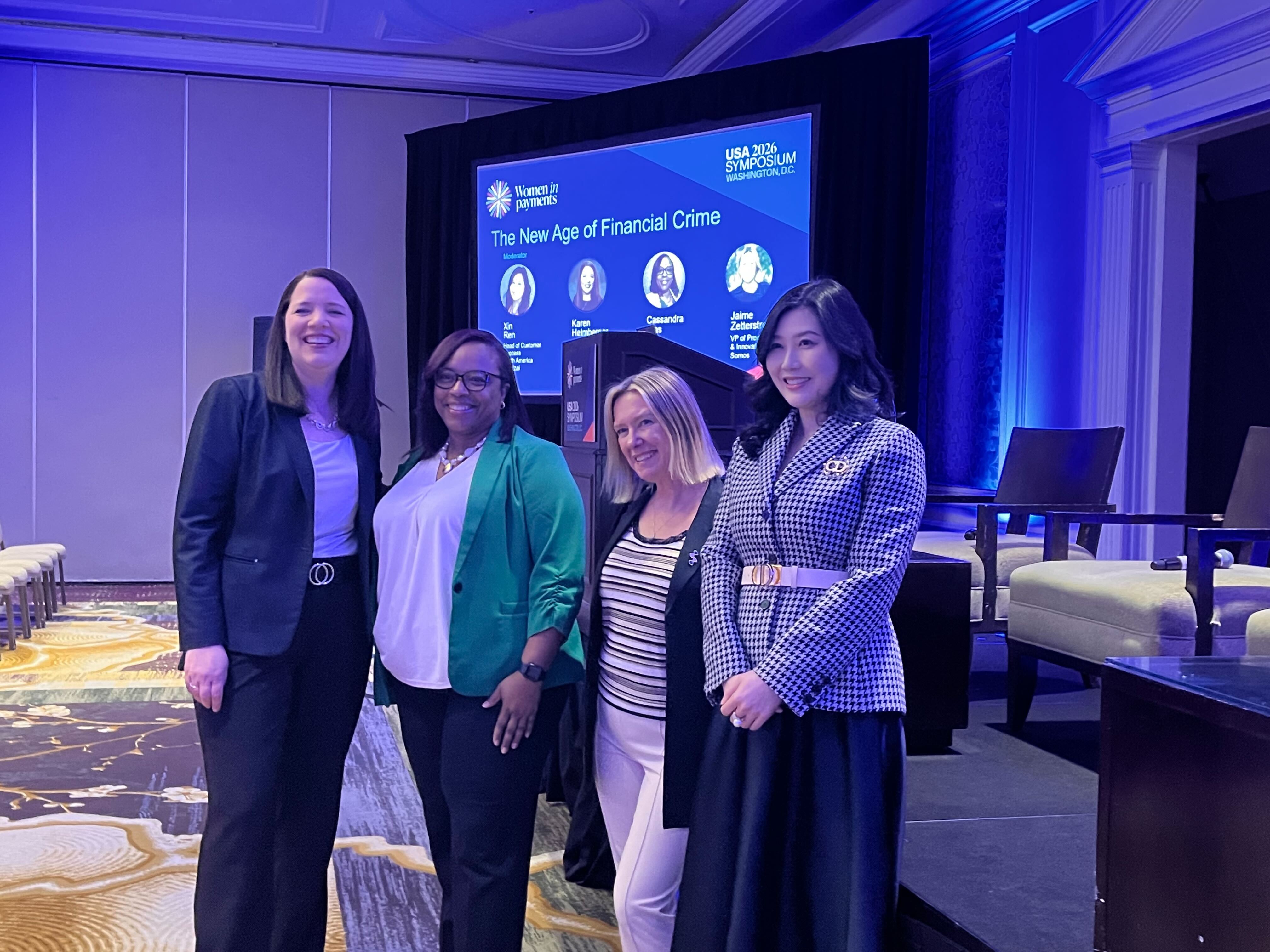
Financial crime is evolving fast. Today’s scams are coordinated, tech-enabled and designed to move from a single message or phone call to identity compromise and payment fraud in minutes.
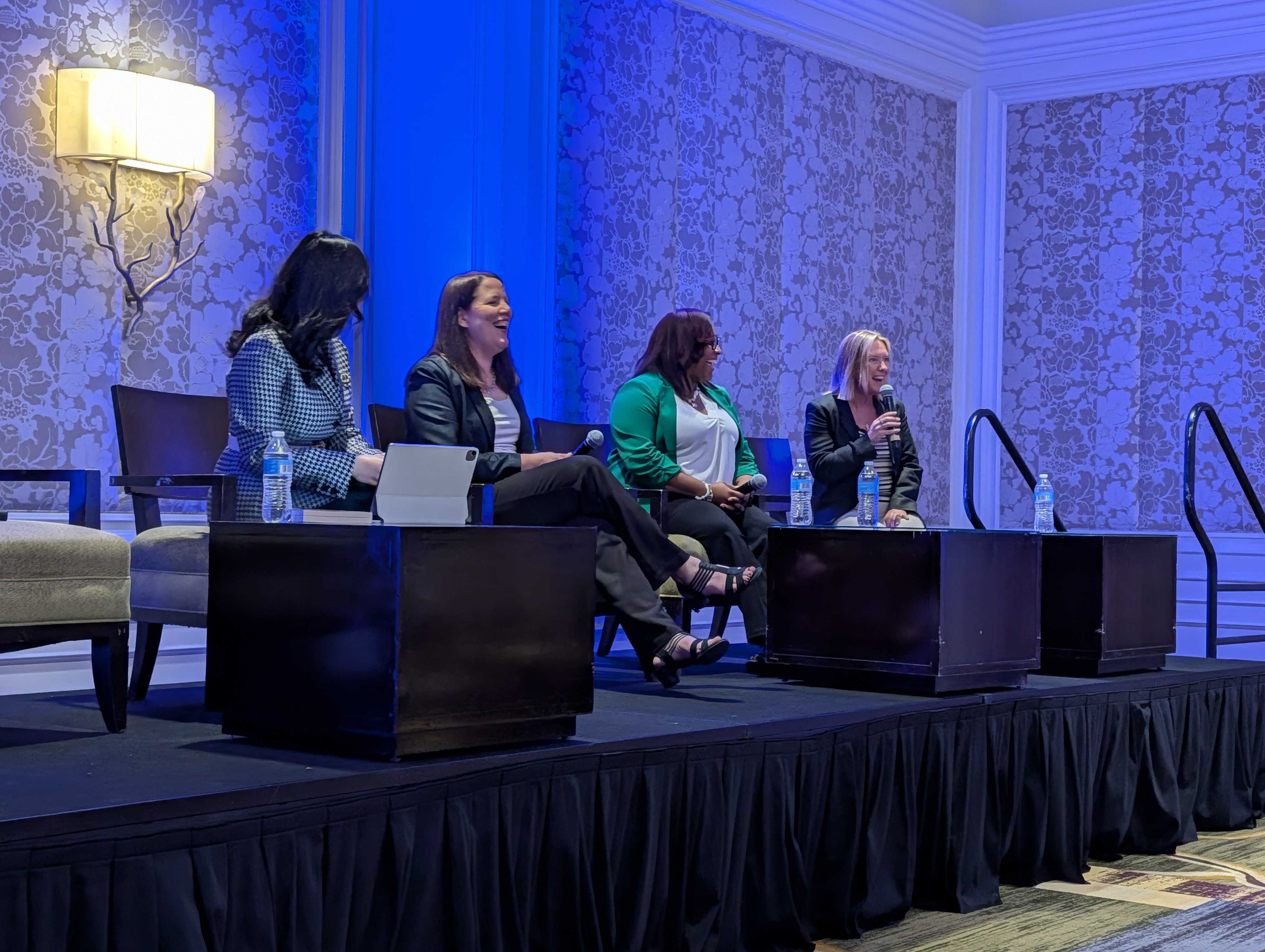
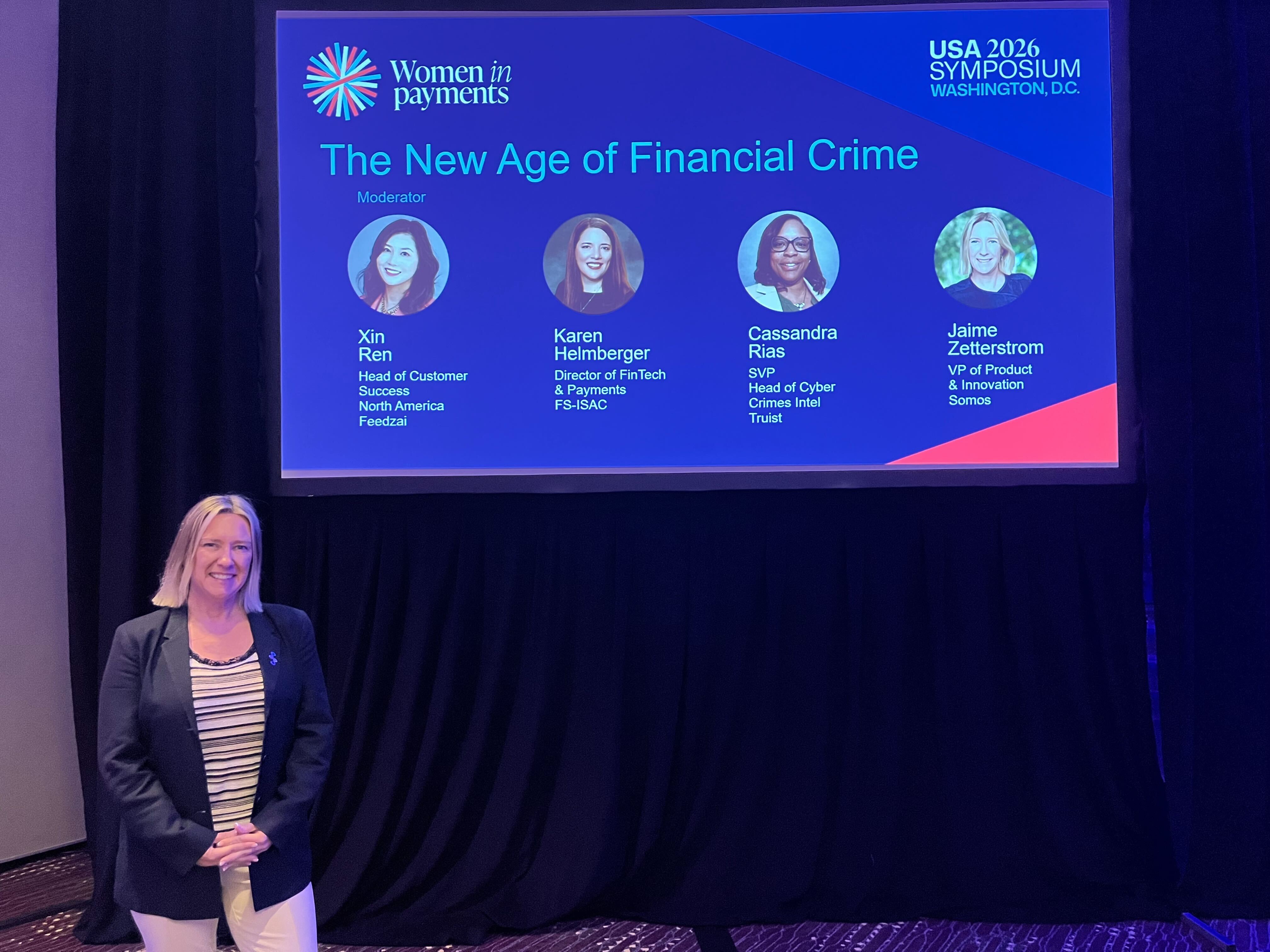
At Women in Payments USA, panelists from Feedzai, FS-ISAC, Truist and Somos explored what this “new age” looks like in practice and what leaders can do now to prevent losses earlier in the attack lifecycle.
Fraud is becoming industrialized and it often starts with a phone number
A recurring theme from the conversation: fraud increasingly begins upstream, before a bank ever sees suspicious transactions. Criminal networks use phishing texts, spoofed calls and social engineering to build trust, gather details and coach victims through verification steps meant to protect them.
By the time financial institutions detect activity, a customer may already be compromised. That reality is driving a shift in how teams think about detection, investigation and prevention.
 A practical prevention framework built around convergence, intelligence and resilience
The panel discussion centered on a cyber-fraud prevention framework grounded in three actions many organizations are prioritizing now.
-
Converge internal teams to reduce blind spots
Threat actors coordinate across roles. Many organizations still separate fraud, cybersecurity, risk and operations. When teams use different tools, different language and different measures of success, they miss the full pattern of an active campaign.
A convergence approach helps teams share context early, align on ownership and act faster. This includes treating inbound and outbound calls as high-risk trust moments, not just service interactions.
-
Use cross-sector intelligence to see attacks sooner
Fraud does not respect industry boundaries. Telecom providers, financial institutions and intelligence-sharing communities each see different parts of the same fraud chain. When those insights connect, organizations can spot tactics earlier and respond with greater precision.
The discussion underscored the value of real-time intelligence sharing across organizations and through trusted communities so defenders can identify repeatable patterns, coordinate response and reduce customer impact.
-
Build proactive resilience with predictive signals, not just post-loss recovery
Modern fraud prevention requires moving upstream. That means identifying indicators that a scam is being set up, even before money moves.
Signals that may matter include unusual session behavior, signs of remote access, changes tied to SIM swap activity and known spoofing patterns. AI can help surface these indicators, prioritize investigations and support faster decisioning. The goal is not simply to detect fraud. It is to stop it earlier, with fewer false positives and less friction for legitimate customers.
What to Do Next: Four Key Takeaways
-
Align cyber, fraud and payments teams around shared workflows and shared outcomes
-
Connect telecom signals with financial intelligence to create earlier warning
-
Invest in prevention strategies that reduce losses before transactions occur
-
Strengthen relationships, not just solutions. The right partnerships bring ongoing collaboration, shared accountability and continuous refinement as fraud tactics change.
How is your organization bringing telecom intelligence into fraud prevention workflows today?
If you are exploring how trusted numbering data can support earlier detection and stronger customer protection, connect with Somos to continue the conversation.
Stay Connected
Stay in touch! Sign up for our monthly newsletter.
Need to reach us sooner? Call, text, or email us at:
844.HEY.SOMOS help@somos.com
